
What Are the Most Common Causes of a Leaking Roof?
A leaking roof can start as a small problem but quickly lead to damage inside the home. Water entering through the roof may affect ceilings, insulation, timber, plaster and interior decoration if it is not dealt with promptly.
The source of a leak is not always directly above the visible damp patch. Water can travel along roofing felt, battens or roof timbers before appearing elsewhere inside the property, which is why a proper inspection is often needed.
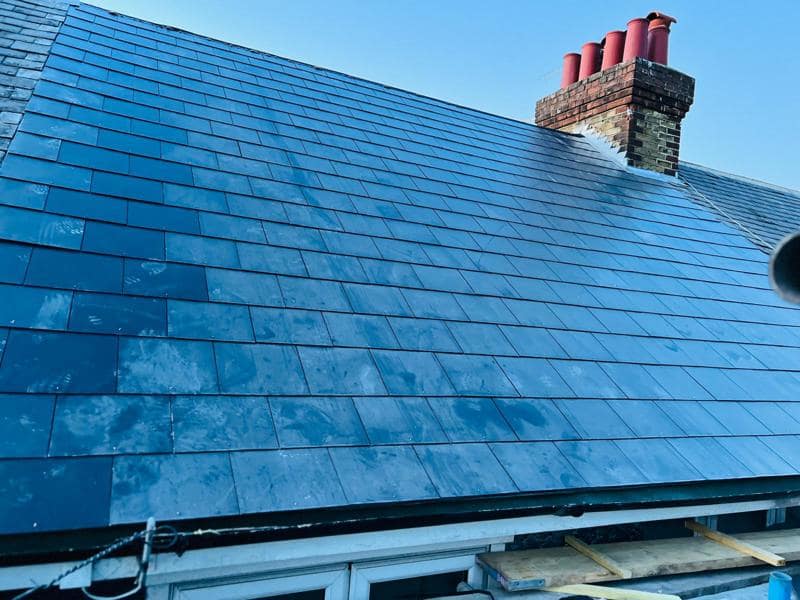
Broken, Slipped or Missing Roof Tiles
Damaged roof tiles are one of the most common causes of roof leaks.
Strong winds, frost, age and worn fixings can cause tiles to crack, loosen or move out of position. Once this happens, rainwater may reach the membrane and roof structure underneath.
Even one missing tile can leave the roof vulnerable, especially during heavy or wind-driven rain. Replacing damaged tiles early can help prevent a small issue from becoming a larger repair.
Damaged Lead Flashing
Lead flashing is used around chimneys, dormer windows, roof valleys and areas where the roof meets a wall.
Its purpose is to seal vulnerable joints and direct rainwater away from the building. Over time, flashing can crack, lift or pull away from the brickwork.
When gaps appear, water can enter around the joint. Leaks around chimneys are often caused by faulty flashing rather than the roof tiles themselves.
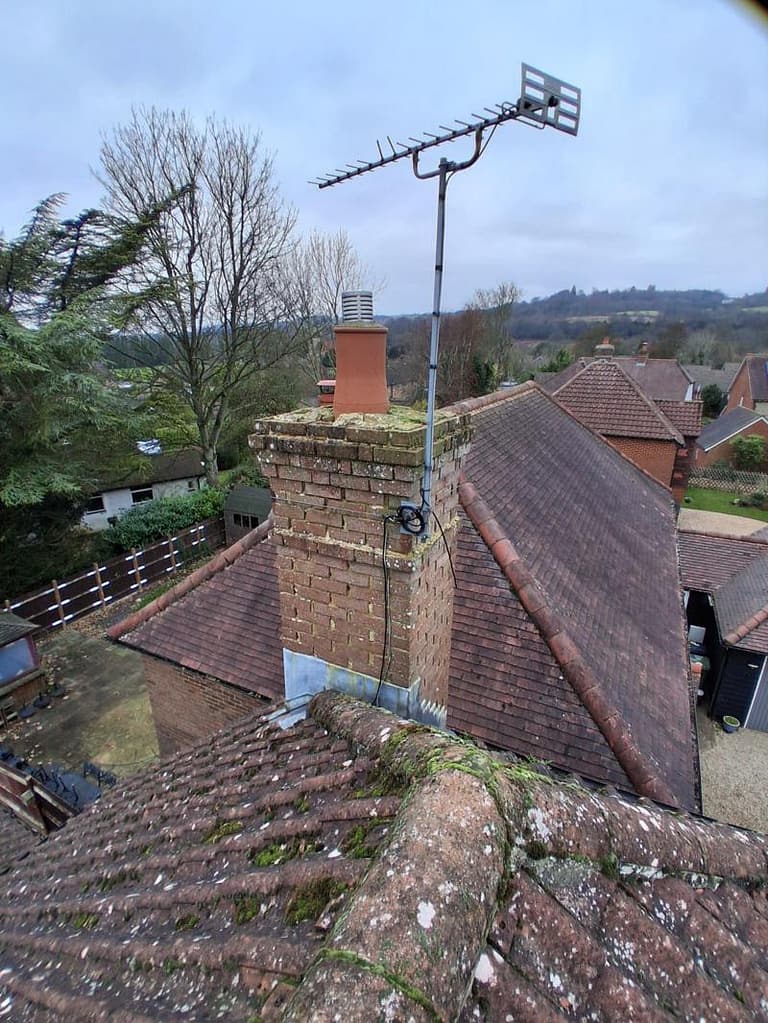
Chimney Defects
Chimneys are constantly exposed to rain, wind and frost, which means the brickwork and mortar can deteriorate over time.
Cracked pointing, damaged bricks and failing flaunching around the chimney pots may all allow water into the stack and surrounding roof structure.
Signs can include damp patches around the chimney breast, water staining in the loft or leaks that appear after prolonged rainfall.
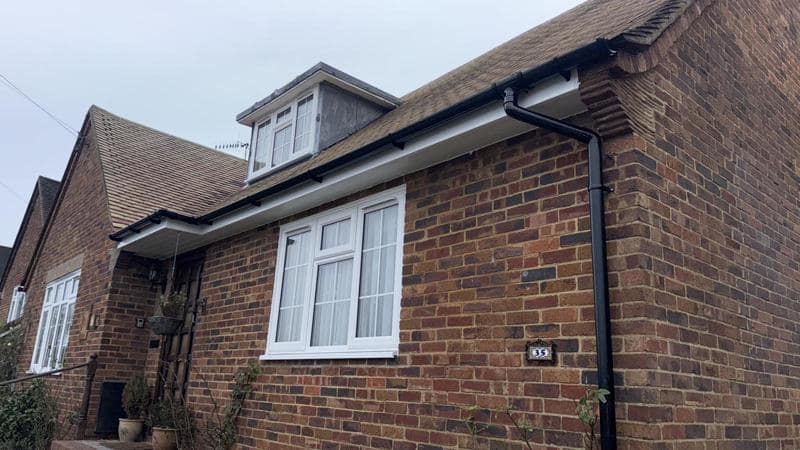
Blocked or Damaged Gutters
Gutters are designed to collect rainwater and carry it safely away from the roof.
When they become blocked with leaves, moss or debris, water can overflow behind the fascia boards or run down the outside walls. This may create damp patches and damage around the roofline.
Cracked gutter joints, loose brackets and damaged sections can cause similar problems. Regular gutter cleaning and maintenance can help reduce the risk of leaks.
Roof Valley Damage
Roof valleys are the channels formed where two roof slopes meet. They carry a large amount of water during rainfall, making them particularly vulnerable to wear.
Leaks may be caused by cracked valley lining, damaged leadwork, loose tiles, failing mortar or debris blocking the flow of water.
Because water can spread from the valley into surrounding areas, these leaks are often difficult to locate without a close inspection.
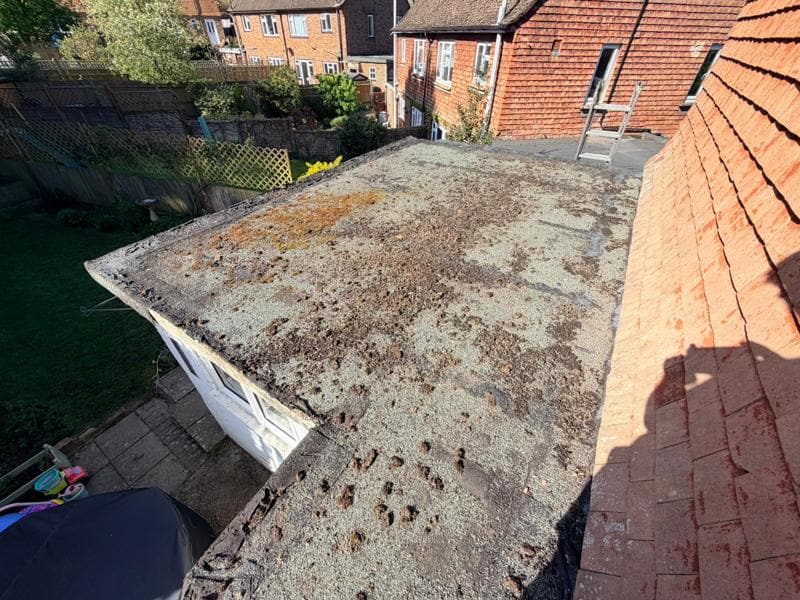
Flat Roof Wear and Damage
Flat roofs can develop leaks when the surface covering becomes worn or damaged.
Common problems include cracks, splits, blisters, failed seams and damage around edges or drainage outlets. Standing water can also place pressure on weak areas if the roof does not drain correctly.
A small local repair may be possible in some cases, although an older or badly deteriorated flat roof may require replacement.
Roof Windows and Skylights
Roof windows and skylights depend on seals and flashing systems to keep water out.
Leaks can develop when the flashing is damaged, seals deteriorate or nearby roof tiles become loose. Debris around the window may also prevent rainwater from draining properly.
Water appearing around a roof window should be inspected carefully, as the fault may be with the window itself or the roofing above it.
Signs Your Roof May Be Leaking
Common warning signs include:
- Brown or yellow marks on ceilings.
- Peeling paint or wallpaper.
- Damp patches near external walls.
- Wet insulation or roof timbers.
- Mould or musty smells in the loft.
- Water appearing after heavy rainfall.
- Visible daylight through parts of the roof.
These signs should not be ignored, even if the area dries out between periods of rain.
Should the Roof Be Repaired or Replaced?
Many roof leaks can be fixed with a local repair. This may involve replacing a few tiles, renewing a section of flashing or repairing damaged guttering.
A larger replacement may be more suitable when the roof is old, leaks are appearing in several areas, the membrane has deteriorated or previous repairs continue to fail.
The best option depends on the age, condition and construction of the roof.
Arrange a Roof Inspection Early
A small leak can become much more expensive if it is left untreated. Continued water exposure may damage timber, plasterboard, insulation and interior finishes.
A professional roof inspection can identify the source of the problem and recommend the most appropriate repair.
Towergate Builders provides roof inspections, roof repairs and complete roof replacements across Kent. Contact us today for a free quote!