
Is Porcelain Paving Suitable for Kent's Wet Weather?
When planning a new patio, choosing the right paving material is one of the most important decisions you’ll make. While appearance plays a big part, it’s equally important to consider how well your chosen surface will cope with the British weather.
For homeowners across Kent, unpredictable rainfall, damp conditions and occasional freezing temperatures can all influence how a patio looks and performs over time. Some paving materials require regular maintenance to keep them in good condition, while others are designed to withstand changing weather conditions with relatively little upkeep.
Porcelain paving has become an increasingly popular choice for modern gardens, offering a stylish finish and a range of practical benefits. But how suitable is it for properties in Canterbury and the wider Kent area?

How Does Porcelain Paving Perform in Wet Weather?
One of the main considerations when choosing patio paving is how the material responds to moisture. Frequent rainfall can cause problems for certain surfaces, particularly those that absorb water or become stained easily.
Outdoor porcelain paving is manufactured at extremely high temperatures, creating a dense surface with very low water absorption. This makes it particularly resistant to moisture and helps prevent water from penetrating the tiles.
Unlike some natural stone materials, porcelain is less likely to absorb rainwater, reducing the risk of moisture-related staining and deterioration.
However, while the tiles themselves are highly water-resistant, proper patio installation remains essential. Suitable drainage and a correctly prepared base help ensure rainwater can flow away from the surface rather than collecting in unwanted areas.
Is Porcelain Paving Slippery When Wet?
Slippery paving is a common concern for homeowners, especially when designing patios that will be used by children, older family members or visitors throughout the year.
The slip resistance of porcelain paving depends on the type of tiles selected and their surface finish.
Outdoor porcelain tiles are available with textured surfaces designed to provide additional grip in wet conditions. Many products are marketed with an R11 slip resistance rating, making them a popular option for external patios and garden pathways.
However, an R11 rating alone does not guarantee that paving will be safe in every wet condition. Checking the manufacturer’s wet slip resistance test results can provide a better understanding of how a particular product performs.
Selecting porcelain tiles specifically designed for outdoor use is important, as smooth or polished indoor tiles may not provide suitable grip when exposed to rain.
Can Porcelain Patios Withstand Frost and Cold Temperatures?
Although Kent generally experiences relatively mild winters, temperatures can occasionally fall below freezing. This can cause problems for paving materials that absorb significant amounts of moisture.
When water penetrates certain porous materials and freezes, it expands. Repeated freezing and thawing can contribute to cracking, surface deterioration and other damage over time.
Porcelain paving has an extremely low water absorption rate, making properly specified outdoor porcelain tiles highly resistant to frost damage.
This is one of the reasons porcelain is often considered a practical choice for gardens exposed to changing seasonal conditions.
However, the quality of the installation is just as important as the material itself. An unsuitable base, poor drainage or incorrect laying methods can still result in problems, regardless of how durable the paving tiles are.
Does Porcelain Paving Require Much Maintenance?
For homeowners looking for a patio that remains attractive without constant attention, maintenance is another important consideration.
Some natural stone surfaces may need periodic sealing to help protect against staining and moisture absorption. Porcelain paving generally does not require sealing because of its dense, non-porous surface.
Routine maintenance usually involves sweeping away leaves, dirt and debris, followed by occasional washing with water and a suitable cleaning product.
Although porcelain is resistant to many common stains, spillages should still be cleaned promptly to prevent marks from becoming difficult to remove.
Moss and algae can also develop on dirt, debris or within paving joints, particularly in damp and shaded areas. Keeping the patio clean and ensuring water drains away properly can help minimise this problem.
With regular care, porcelain paving can retain its appearance for many years without the extensive maintenance associated with some other patio materials.
Will Heavy Rain Cause Water to Collect on a Porcelain Patio?
Even when using a highly water-resistant material, effective drainage remains a crucial part of patio installation.
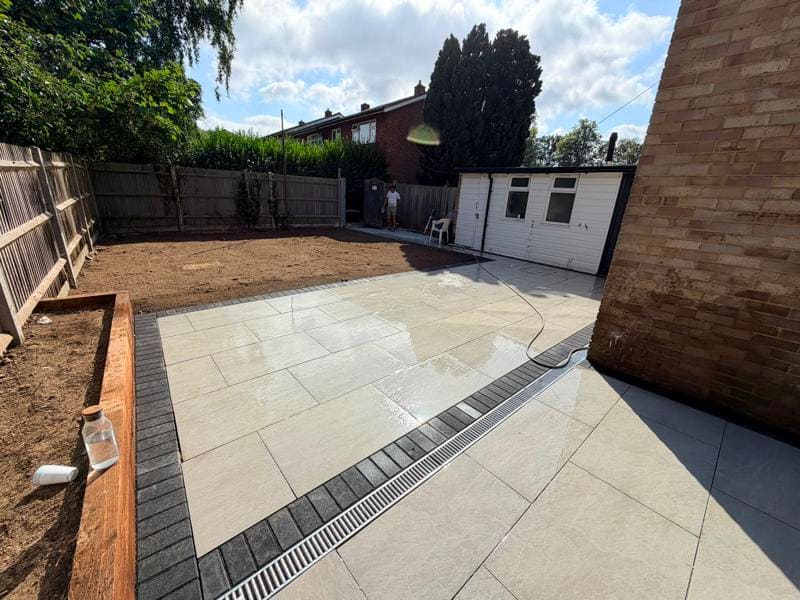
Porcelain tiles themselves generally allow very little water to pass through them. Instead, rainwater needs to drain across the finished surface towards suitable drainage points.
If a patio is installed without the appropriate slope, water may collect in certain areas, creating puddles and potentially increasing the risk of slippery conditions.
Professional patio installation involves preparing a suitable sub-base, establishing the correct levels and ensuring that surface water can drain away effectively.
For properties in Canterbury and other parts of Kent, where periods of heavy rainfall can occur, these considerations are particularly important.
A well-designed patio should take account of the surrounding garden, existing drainage arrangements and the property’s requirements before installation begins.

How Does Porcelain Paving Compare With Natural Stone in Wet Conditions?
Natural stone and porcelain paving can both create attractive outdoor spaces, but their characteristics differ.
Natural stone materials, such as sandstone and limestone, vary in porosity and may require additional care to protect their appearance. Some products benefit from sealing, while others can be more susceptible to staining or weather-related changes.
Porcelain paving offers a more consistent manufactured finish and typically absorbs considerably less moisture.
Its resistance to staining, frost and general weathering makes it an appealing option for homeowners who want a practical patio surface with relatively straightforward maintenance.
However, both materials can perform well when correctly selected and professionally installed. The right choice will depend on your preferred appearance, budget, maintenance expectations and how you intend to use your outdoor space.
Why Professional Porcelain Patio Installation Matters
Choosing high-quality paving is only one part of creating a long-lasting patio. Even the most durable porcelain tiles can experience problems if they are not installed correctly.
Porcelain paving requires suitable installation methods, including a properly prepared base, appropriate bedding materials and compatible bonding products.
Correct jointing and drainage arrangements also play an important role in the patio’s overall performance.
Poor installation can lead to movement, drainage issues or uneven surfaces, potentially affecting both the appearance and practicality of the finished patio.
Working with experienced patio installers helps ensure that the materials and installation methods are suited to the property and its surroundings.
Porcelain Patio Installations in Kent
When choosing paving for a garden in Kent, it’s important to consider how the surface will perform throughout the seasons, not just how it looks immediately after installation.
With its low water absorption, frost resistance and range of slip-resistant outdoor finishes, porcelain paving can be an excellent choice for homeowners looking for a durable and attractive patio.
At Towergate Builders, we provide professional patio installation services for homeowners across Canterbury, Whitstable and the surrounding areas of Kent.
Whether you’re replacing an old patio or creating a completely new outdoor living space, our team can help you explore suitable paving options for your property.
Contact us today to discuss your porcelain patio installation and arrange a free, no-obligation quotation.