
How Long Does Indian Sandstone Last? Durability, Maintenance and Weather Resistance
Indian sandstone is a popular choice for garden patios across the UK, offering a natural appearance, attractive colour variations and a timeless finish that complements both traditional and modern properties.
If you’re considering installing a new patio, one of the questions you may have is how long does Indian sandstone last?
A new patio is an important investment in your outdoor space, so it’s worth understanding how different paving materials perform over time.
The good news is that Indian sandstone is a durable natural stone that can provide many years of use when properly installed and maintained.
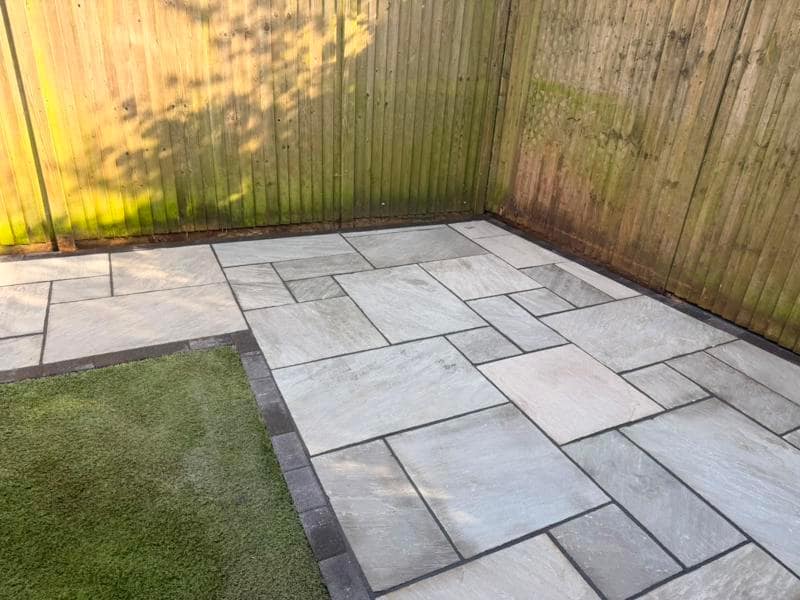
What Is the Average Lifespan of an Indian Sandstone Patio?
A good-quality Indian sandstone patio can typically last 25 to 30 years or longer, provided it has been correctly installed and properly maintained.
However, there isn’t a guaranteed lifespan for every sandstone patio.
Several factors can influence how long the paving remains in good condition, including:
- The quality and thickness of the sandstone
- How the ground was prepared before installation
- The stability of the sub-base and bedding
- Drainage around the patio
- Exposure to moisture and changing temperatures
- How frequently the patio is used
- The level of maintenance carried out
Some sandstone patios remain attractive and functional for decades, while poorly installed paving can develop problems much sooner.
This is why professional installation is just as important as choosing quality paving slabs.
Is Indian Sandstone Durable Enough for British Weather?
Indian sandstone is generally well suited to outdoor use in the UK, making it a popular option for garden patios and pathways.
However, like all natural stone, its performance depends on the quality of the material and the conditions in which it is installed.
Rain and Moisture
Sandstone is a naturally porous material, meaning it can absorb some moisture.
During wet weather, you may notice areas of your patio appearing darker as the stone becomes damp.
This is a normal characteristic of many natural sandstone products.
However, standing water and poor drainage can contribute to staining, algae growth and deterioration over time.
A correctly installed patio should incorporate suitable falls to allow rainwater to drain away rather than collect on the surface.
Frost and Freezing Temperatures
During winter, water that enters porous materials can freeze and expand.
Repeated freezing and thawing may affect some types of natural stone, particularly where the paving is unsuitable for the conditions or has been incorrectly installed.
Choosing sandstone specified for outdoor use in the UK, along with suitable groundwork and drainage, helps reduce the risk of frost-related damage.
It’s also advisable to avoid harsh de-icing salts unless the paving supplier confirms they’re suitable for the stone.
Sunshine and Warm Weather
Indian sandstone can also withstand regular exposure to sunlight.
However, the appearance of natural stone may change gradually as it weathers.
Some shades may appear lighter over time, while exposure to moisture, dirt and organic growth can affect how the colours look.
These natural changes are part of the character of sandstone paving and don’t necessarily indicate that the slabs are deteriorating.
How Much Maintenance Does an Indian Sandstone Patio Need?
Indian sandstone is relatively straightforward to maintain, but it isn’t completely maintenance-free.
Like most outdoor paving surfaces, it can collect dirt, leaves, moss and algae, particularly in shaded or damp areas.
Fortunately, a few simple maintenance tasks can help keep your patio in good condition.
Sweep Your Patio Regularly
Removing leaves, soil and debris helps prevent organic material from building up on the surface.
This is particularly important during autumn and winter when wet leaves can encourage staining and slippery conditions.
Clean the Surface When Necessary
Warm water, a soft brush and a suitable stone-safe cleaner can help remove general dirt.
Avoid using harsh acidic cleaning products, which may damage certain natural stone surfaces or surrounding jointing materials.
If you’re considering pressure washing, check the paving manufacturer’s guidance first. Excessive pressure or incorrect techniques can damage the stone surface or dislodge jointing.
Keep an Eye on Moss and Algae
Moss and algae can develop on outdoor paving, especially in shaded gardens that remain damp for long periods.
Regular cleaning and effective drainage can help reduce the conditions that encourage growth.
Check the Patio Joints
Over time, patio joints may begin to deteriorate, particularly if exposed to repeated movement or weathering.
Damaged jointing can allow water and debris to enter gaps between the slabs.
Repairing affected joints when necessary can help protect the overall condition of the patio.
Does Indian Sandstone Need Sealing?
Sealing is a common consideration for homeowners installing natural stone paving.
A suitable sandstone sealer can help reduce moisture absorption and make some types of staining easier to manage.
However, not every sandstone patio needs to be sealed. The decision depends on the type of stone, its location, the desired appearance and the manufacturer’s recommendations.
Some sealers can also alter the colour or finish of the paving, so it’s important to choose a product suitable for the specific sandstone. If sealing is recommended, the patio must be properly cleaned and sufficiently dry before the product is applied. Professional advice can help determine whether sealing would benefit your patio.
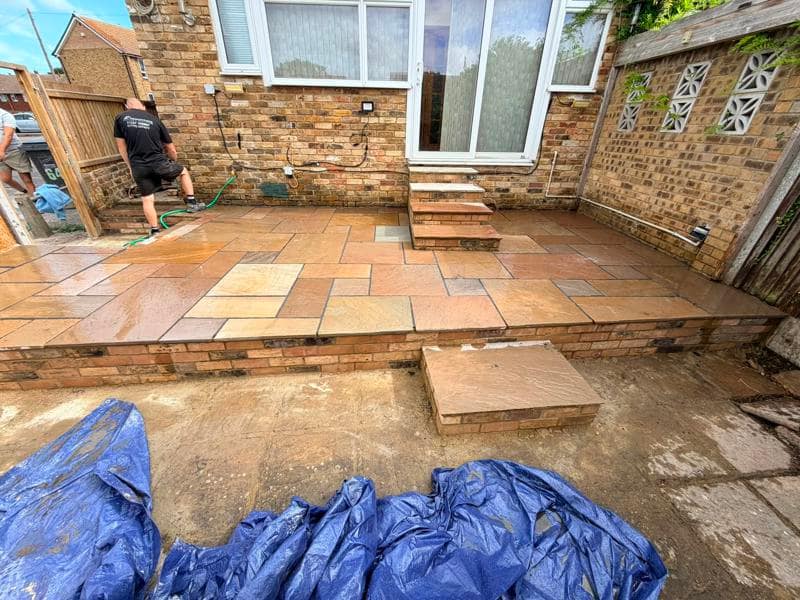
Can Damaged Indian Sandstone Slabs Be Replaced?
One advantage of a traditionally laid sandstone patio is that individual damaged slabs may be replaceable without removing the entire patio.
If a slab becomes cracked, loose or badly damaged, it may be possible to lift the affected section and install a suitable replacement.
However, the cause of the damage should be investigated first.
For example, if the slab cracked because the underlying foundation has moved, simply replacing the stone may not provide a lasting solution.
A professional assessment can help determine whether a localised repair is appropriate or whether more extensive work is required.
Because Indian sandstone is a natural material, matching the exact colour and markings of an older patio may also be difficult.
Is Indian Sandstone a Good Choice for a Long-Lasting Patio?
For many homeowners, Indian sandstone offers an appealing combination of durability, natural beauty and versatility. It works particularly well in gardens where a traditional or natural appearance is preferred.
With a wide choice of colours, finishes and laying patterns, sandstone can complement everything from period properties to contemporary outdoor spaces.
It’s also suitable for various garden features, including:
- Outdoor seating and dining areas
- Garden pathways
- Raised patios
- Courtyards
- Landscaped garden areas
- Steps and connecting paved sections, where suitable materials are specified
The key to achieving a long-lasting patio is choosing appropriate paving materials and ensuring they’re installed correctly.
Why Professional Patio Installation Matters
Even the best-quality Indian sandstone can develop problems if the ground preparation or installation isn’t carried out correctly.
A professionally installed patio should take into account the condition of the existing ground, the proposed layout, drainage requirements and the intended use of the space.
Proper installation helps ensure the paving remains stable, drains effectively and provides a practical surface for everyday use.
It’s also an opportunity to consider additional landscaping features, such as pathways, steps and decorative edging, to create a coordinated outdoor space.
Professional Indian Sandstone Patio Installation in Kent
If you’re considering an Indian sandstone patio for your garden, Towergate Builders & Developers can help.
We provide professional patio and landscaping services across Canterbury, Dover, Faversham, Gillingham, Ramsgate, Whitstable and surrounding areas of Kent.
Whether you’re replacing an old patio, creating a new outdoor seating area or planning a complete garden transformation, our team can discuss suitable paving materials and designs for your property.
From preparing the ground to laying the finished paving, careful installation is essential for creating a patio that’s attractive, practical and designed to last.
Every garden is different, which is why we provide personalised advice and quotations based on the individual requirements of each project.
Thinking about installing an Indian sandstone patio in Kent?
Contact us today to discuss your ideas and arrange a free, no-obligation quotation.